Acid Mist Scrubber Systems for Pickling, Plating & Chemical Plants
Engineered packed-bed scrubbers, mist eliminators, corrosion-resistant FRP fans and controls for HCl, sulfuric, nitric, hydrofluoric and mixed-acid exhaust.
Send request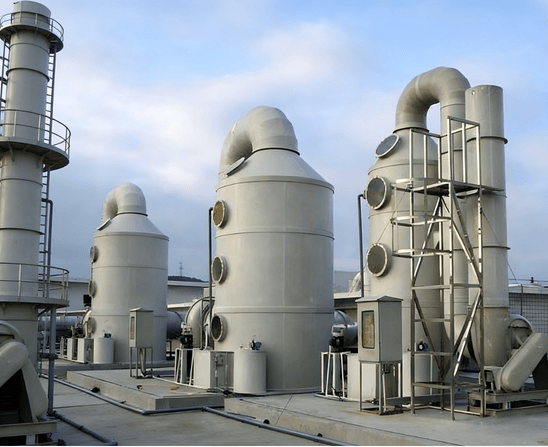
Select the process from the acid, aerosol and duty
Acid mist control is not a one-equipment decision. A successful system starts with source capture, then matches gas absorption, droplet removal, construction material, fan duty and liquid treatment to the actual process. A packed tower is often the core stage for soluble acid gases, while a mesh, chevron or specialist fiber-bed mist eliminator may be required for fine liquid aerosols.
Zhengzhou Enviro Solutions supplies project-specific FRP, PP, PVC or stainless configurations. Final material selection and expected outlet performance are confirmed only after the complete gas and liquid chemistry has been reviewed.
Typical acid mist applications
| Pollutant | Common sources | Engineering starting point |
|---|---|---|
| Hydrochloric acid (HCl) | Pickling tanks, metal cleaning, chemical storage vents | Water or alkaline packed-bed absorption; mist elimination |
| Sulfuric acid mist (H2SO4) | Battery, anodizing, fertilizer and metal treatment lines | Droplet capture plus packed-bed or fiber-bed polishing as required |
| Nitric acid / NOx | Metal finishing, nitration and chemical processes | Chemistry-specific multi-stage absorption; NOx assessed separately |
| Hydrofluoric acid (HF) | Glass etching, semiconductor and specialty chemical processes | Compatible resin or thermoplastic construction with alkaline scrubbing |
| Chromic acid mist | Chrome plating and anodizing | High-efficiency mist capture with chemistry-compatible internals |
Recommended treatment train
1. Capture and ducting
Enclose tanks where practical and maintain the capture velocity needed to prevent acid vapor and mist escaping into the workplace.
2. Gas conditioning
Control temperature, solids and peak loading before the main absorber; segregate incompatible streams when required.
3. Packed-bed absorption
Select packing, irrigation rate, reagent and contact area from gas solubility, reaction chemistry and mass-transfer duty.
4. Mist elimination
Choose droplet-removal internals from aerosol size, liquid loading, pressure-drop allowance and fouling tendency.
5. Corrosion-resistant fan
Place and select the FRP or other compatible fan from system resistance, temperature and gas chemistry.
6. Controls and liquid management
Monitor differential pressure, tank level, circulation, pH or ORP as relevant, blowdown and alarm conditions.
Material selection is chemistry-specific
| Material | Why it may be selected | Review before specification |
|---|---|---|
| FRP | Corrosion resistance with structural strength for towers, ducts and fans | Resin system, temperature, oxidizers, solvents, UV and fire requirements |
| PP / PVC | Useful thermoplastic options for many wet, corrosive duties | Temperature, mechanical load, outdoor exposure and joining method |
| Stainless steel | Structural, hygiene or temperature requirements where alloy compatibility is proven | Chlorides, reducing acids, crevice conditions and exact alloy grade |
Data required for sizing and quotation
- Normal, minimum and peak airflow in m³/h
- Every acid species and inlet concentration, including mixed gases
- Mist droplet size or aerosol loading when available
- Temperature, humidity and condensation conditions
- Dust, oil, salts or other fouling contaminants
- Required outlet concentration or local emission limit
- Operating hours, batch peaks and required standby capacity
- Available footprint, duct routing, voltage and site elevation
Removal efficiency, pressure drop, chemical consumption and outlet concentration are project outputs, not universal catalog promises. They should be tied to an agreed design basis and acceptance test.