Activated Carbon Filters for VOC, Odor and Hazardous Gas Control
We design and manufacture activated carbon filtration systems for the control and reduction of the following types of atmospheric emissions: volatile organic compounds (VOCs), odorous compounds, hazardous air pollutants, and toxic gases. These activated carbon filters are used in applications where low to medium concentrations of pollutants are present, including chemical manufacturing plants, food processing facilities, pharmaceutical production, printing operations, and laboratory environments.
Send request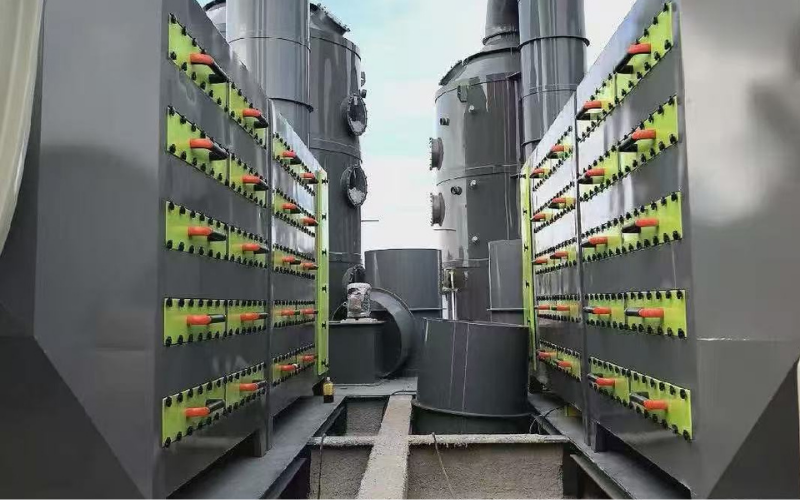
Activated Carbon Filters for VOC, Odor and Hazardous Gas Control
At Guangdong Zhengzhou Environmental Protection Technology Co., Ltd., we design and manufacture systems and technologies for the control and reduction of the following types of atmospheric emissions:
- Volatile Organic Compounds (VOCs) such as hydrocarbons, organic solvents, aromatic compounds, ketones, aldehydes, and chlorinated compounds
- Treatment of unpleasant odor emissions generated in industrial processes, wastewater treatment plants, food processing facilities, and composting operations
- Toxic gases such as sulfur dioxide (SO₂), nitrogen dioxide (NO₂), chlorine (Cl₂), and other hazardous gaseous pollutants present in industrial atmospheres
Our activated carbon filters enable the removal of certain pollutants depending on the flow to be treated, the type and concentration of the contaminant, the treatment systems used, and the target efficiency. For most applications, we can achieve removal efficiencies of over 90%.
The knowledge and experience of our engineering team enable us to adapt the design of each individual unit. We take into account all of the specific working conditions, pollutant concentrations, and specific treatment requirements such as removal efficiency, regulatory compliance, and budget constraints.
Our filters have been designed to continuously remove the degree of saturation of the active carbon. This is achieved through the continuous replacement of the carbon mass in the filter, or through periodic replacement depending on the application. This enables continuous functioning of the system and a significant saving on cost and downtime during change-out of active carbon.
Using adsorption technology, our activated carbon filters are suitable for treating air streams containing VOCs, odors, and hazardous gases. The process is dependent on both the building characteristics and the treatment requirements of the process.
Our AC Filters
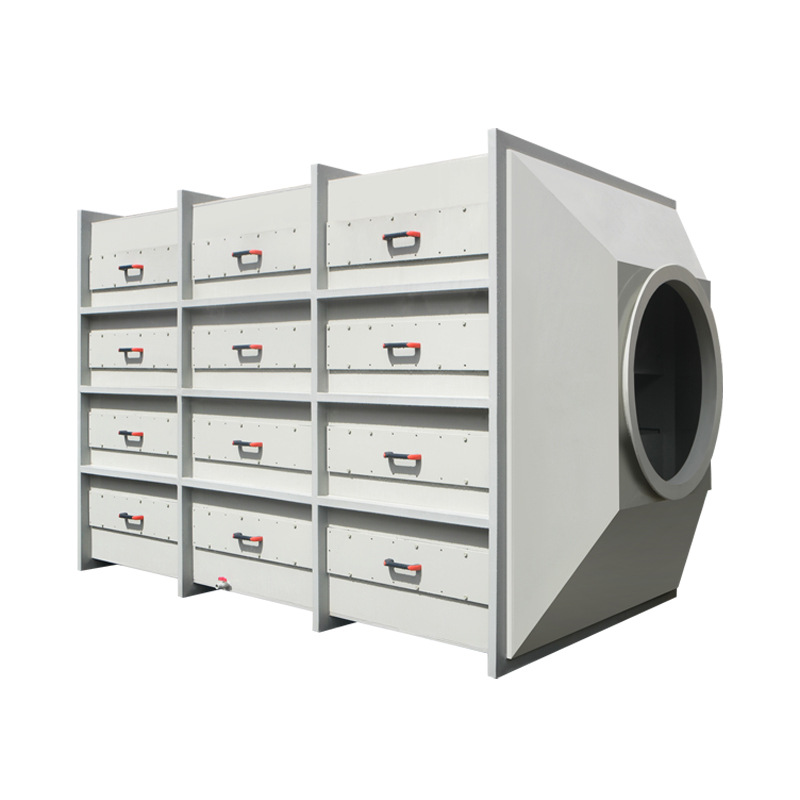
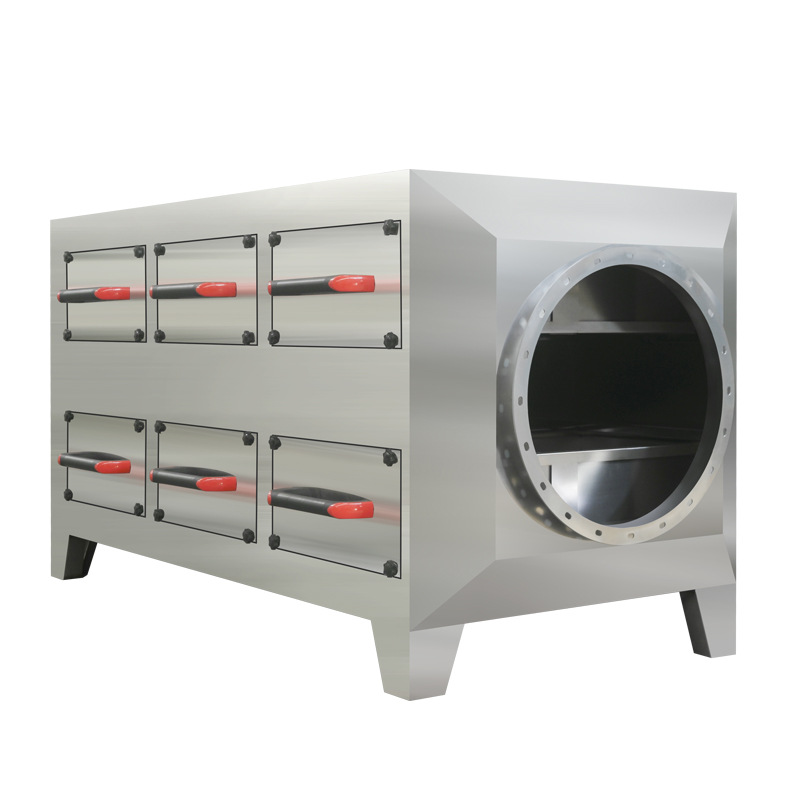
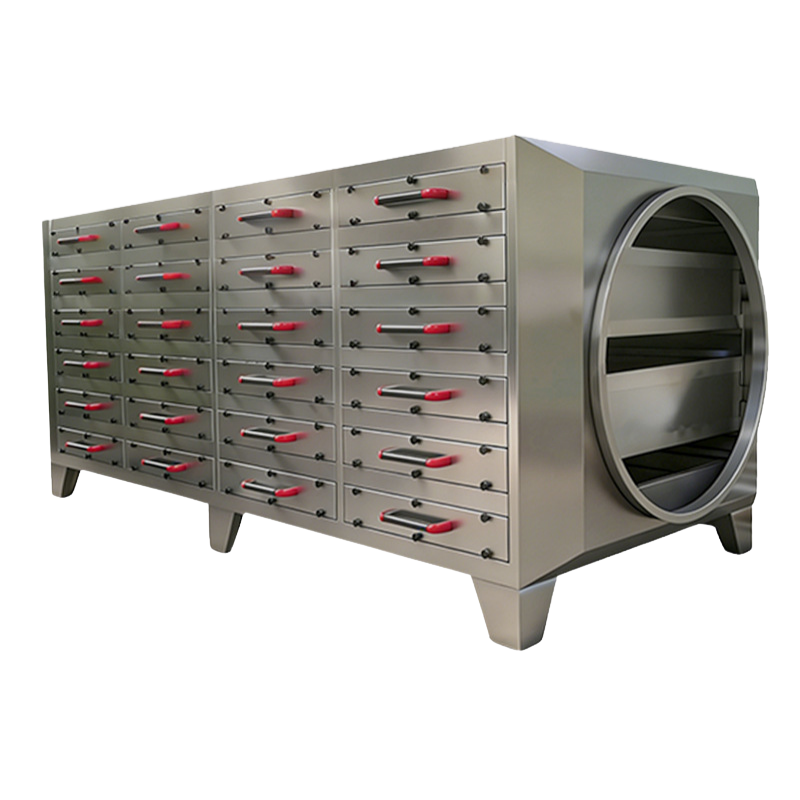
| Product Type | Description |
|---|---|
| Fixed Bed Adsorbers | Single or multi-bed systems for continuous operation |
| Moving Bed Systems | Automated carbon replacement for high-volume applications |
| Cartridge Filters | Compact design for laboratory and small-scale operations |
| Custom Engineered Units | Tailored solutions for specific industrial requirements |
Advantages
- Reliable proven technology compared with other technologies
- A totally automated system without the need for labor costs in the operating process
- Minimum maintenance required
- Automatic monitoring of the active carbon usage and saturation level
- Compact design for applications requiring low space
- Specific design for pollution control systems using software developed by our engineering team, enabling precise adaptation to different working conditions
- Structural adaptation to extreme process and climate conditions
- Low space requirement (small footprint)
- Can operate 24 hours a day, 365 days a year without need for additional fuel
- Easy loading and unloading of the filter bed
- Customizable with various materials (PP, stainless steel, or coating)
- Optimization of the life of the active carbon
- High removal efficiency (>90% for most VOCs and odors)
- No secondary pollution when properly managed
Construction Materials
| Component | Material Options |
|---|---|
| Equipment body | Stainless steel, carbon steel with coating, PP, FRP |
| Filter media | Various types of activated carbon (coal-based, coconut shell, wood-based) |
| Internal structure | Corrosion-resistant materials suitable for chemical exposure |
| Sealing materials | EPDM, PTFE, or silicone gaskets |
| Support structure | Galvanized steel or stainless steel |
| Carbon grade | 20 gpm or above for gas applications |
Activated Carbon Types Available:
- Coal-based activated carbon
- Coconut shell activated carbon
- Impregnated activated carbon (for specific gases)
- Pelletized or granular forms
- Custom blends for mixed pollutant streams
Applications
The technique is applicable to a wide variety of industrial emissions, of which the following are the most common:
| Industry Sector | Typical Applications | Pollutants Treated |
|---|---|---|
| Chemical Manufacturing | Reactor vents, storage tanks, transfer operations | VOCs, solvents, hazardous gases |
| Pharmaceutical Production | Synthesis reactors, drying ovens, QC labs | Organic solvents, odors, API dust |
| Food Processing | Cooking vents, rendering, fermentation | Odors, VOCs, ammonia |
| Printing & Coating | Press exhaust, drying tunnels, ink mixing | Solvents, VOCs, odors |
| Wastewater Treatment | Pump stations, aeration basins, sludge handling | H₂S, mercaptans, amines |
| Laboratories | Fume hoods, analytical equipment | Mixed VOCs, acid gases, odors |
| Automotive | Painting booths, parts cleaning | Solvents, paint overspray |
| Electronics | PCB manufacturing, semiconductor fab | Solvents, acid gases, VOCs |
| Waste Management | Landfills, composting, transfer stations | Landfill gas, odors, VOCs |
| Textile & Leather | Dyeing, finishing, tanning operations | Solvents, odors, formaldehyde |
Activated Carbon for High-Concentration VOCs Applications
For applications with high VOC concentrations, we offer specialized activated carbon systems with enhanced safety features:
Key Design Considerations:
- Temperature monitoring to prevent thermal runaway
- Fire suppression systems integrated into the filter housing
- Nitrogen inerting for high-risk applications
- Explosion-proof construction for Class I, Division 1 areas
- Automatic shutdown upon detection of abnormal conditions
- Regenerative capabilities for solvent recovery applications
Carbon Replacement Strategy
The process is very simple and consists of feeding the activated carbon through a controlled system where the pollutants are trapped. The system includes automatic monitoring of carbon saturation levels, enabling timely replacement before breakthrough occurs. This ensures continuous compliance with emission standards.
Our engineering team has extensive experience in designing activated carbon systems for VOC control, with particular attention to safety, efficiency, and operational cost optimization.
Introduction to Activated Carbon Filters
Activated carbon filters are fixed-bed adsorption systems that use activated carbon granules or pellets to remove pollutants from air streams. The adsorption process is based on the physical and chemical attraction between pollutant molecules and the carbon surface.
Key Principles:
- Physical adsorption through van der Waals forces
- Chemical adsorption for specific pollutant-carbon interactions
- Pore structure determines adsorption capacity
- Surface area typically 500-1500 m²/g for industrial grades
The adsorption process is reversible under certain conditions, allowing for carbon regeneration in some applications. However, for most industrial exhaust treatment applications, spent carbon is replaced and properly disposed of or regenerated off-site.
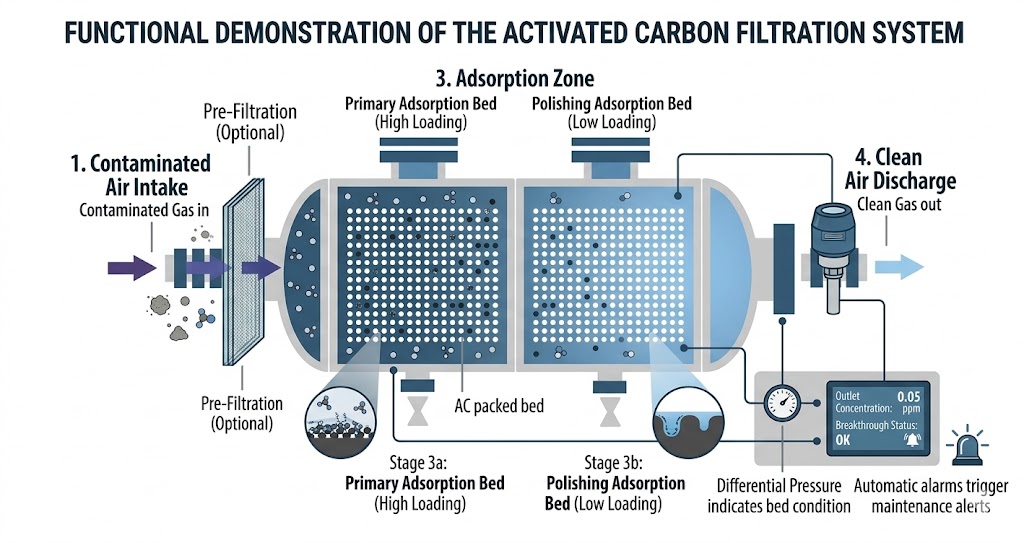
Functioning/Operation of the Activated Carbon Filtration System
The activated carbon filtration system is based on the adsorptive capacity of activated carbon for removing low concentrations of pollutants. The process involves the following stages:
- Contaminated Air Intake: Pollutant-laden air enters the filter housing through the inlet ductwork.
- Pre-Filtration (Optional): Particulate matter is removed to prevent carbon bed fouling and extend carbon life.
- Adsorption Zone: Air passes through the activated carbon bed where pollutants are adsorbed onto the carbon surface through:
- Physical adsorption (van der Waals forces)
- Chemical adsorption (for impregnated carbons)
- Capillary condensation in micropores
- Clean Air Discharge: Treated air exits the filter through the outlet, meeting emission standards.
- Monitoring & Control:
- Differential pressure monitoring indicates bed condition
- Outlet concentration monitoring detects breakthrough
- Automatic alarms trigger maintenance alerts
Operating Parameters:
| Parameter | Typical Range |
|---|---|
| Air velocity | 0.3-0.6 m/s through bed |
| Bed depth | 300-600 mm |
| Contact time | 0.5-2.0 seconds |
| Temperature | <40°C optimal |
| Relative humidity | <70% recommended |
| Inlet concentration | <1000 ppm for most VOCs |
Carbon Replacement Indicators:
- Breakthrough detection at outlet
- Pressure drop increase
- Scheduled replacement based on loading calculations
- Visual inspection (for accessible systems)
Benefits of Activated Carbon Filtration
| Benefit Category | Specific Advantages |
|---|---|
| High Efficiency | >90% removal for most VOCs and odors |
| Versatility | Treats wide range of pollutants in single system |
| Proven Technology | Decades of successful industrial applications |
| Low Operating Cost | No fuel or chemicals required during operation |
| Compact Design | Small footprint suitable for space-constrained sites |
| Quick Installation | Modular systems available for rapid deployment |
| Regulatory Compliance | Meets local, national, and international standards |
| Flexibility | Can be combined with other treatment technologies |