Industrial VOC Treatment Systems and Technology Selection
Compare activated carbon, catalytic oxidation, RTO, biofiltration and wet scrubbing from airflow, VOC composition, concentration, variability, safety and outlet requirements.
Send request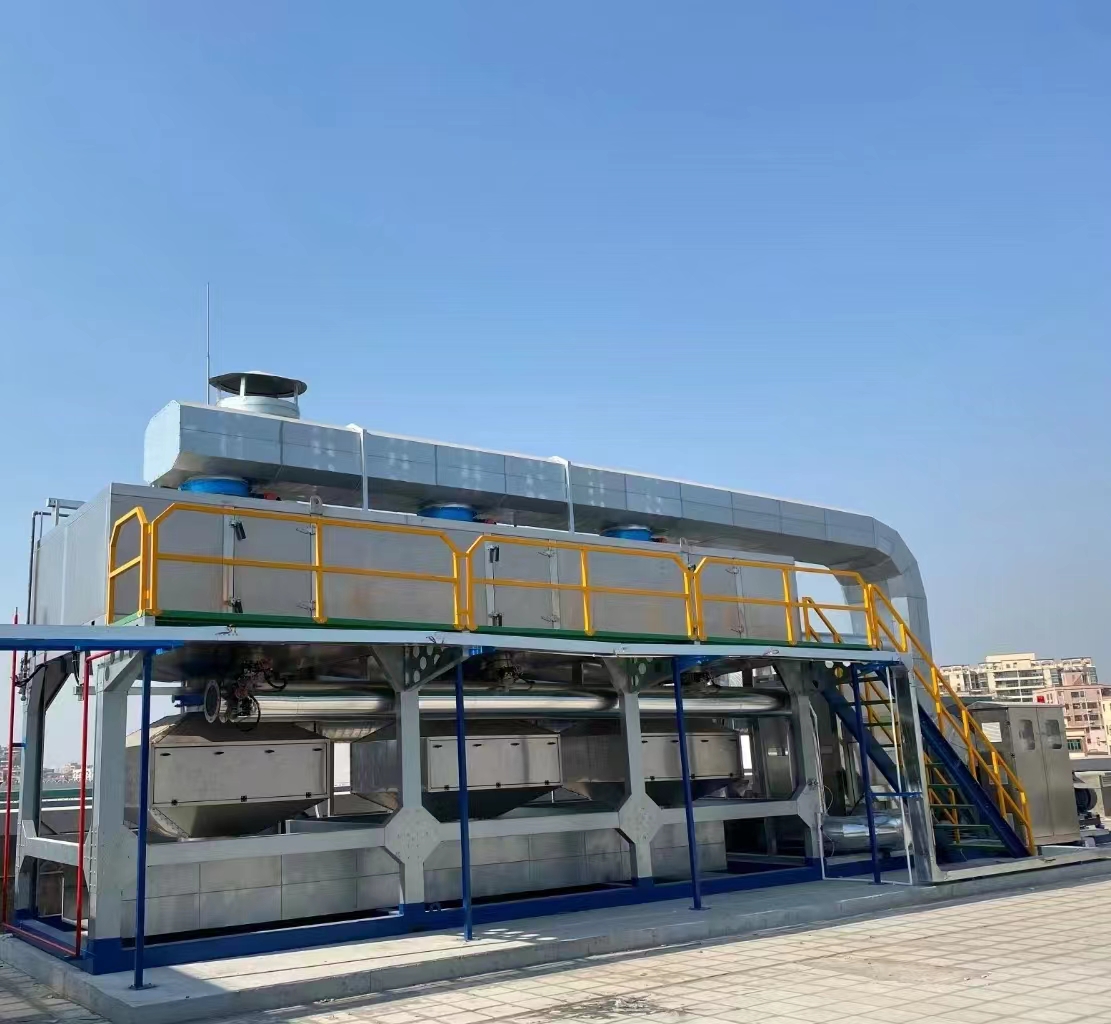
Technologies for VOC Treatment and Removal
VOC technology should be selected from a measured mass load, not from airflow alone. The design basis must identify each compound, normal and peak concentration, lower explosive limit, temperature, humidity, oxygen, dust or aerosol loading, operating schedule, outlet target, and opportunities for solvent recovery or heat integration.
| Technology | Best starting point | Key checks |
|---|---|---|
| Activated carbon | Low or intermittent VOC load; polishing | Breakthrough, humidity, heat release and disposal |
| Catalytic oxidation | Combustible VOCs where lower oxidation temperature is useful | Catalyst poisons, LEL, heat balance and bypass safety |
| RTO | Continuous combustible load with heat recovery potential | Halogens, silicon, particulates, turndown and fuel demand |
| Biofilter | Dilute, biodegradable, humid odor or VOC streams | EBRT, biodegradability, pH, moisture and toxic spikes |
| Wet scrubber | Water-soluble or chemically reactive compounds | Solubility, reagent, liquid treatment and aerosol carryover |
Volatile Organic Compounds Removal

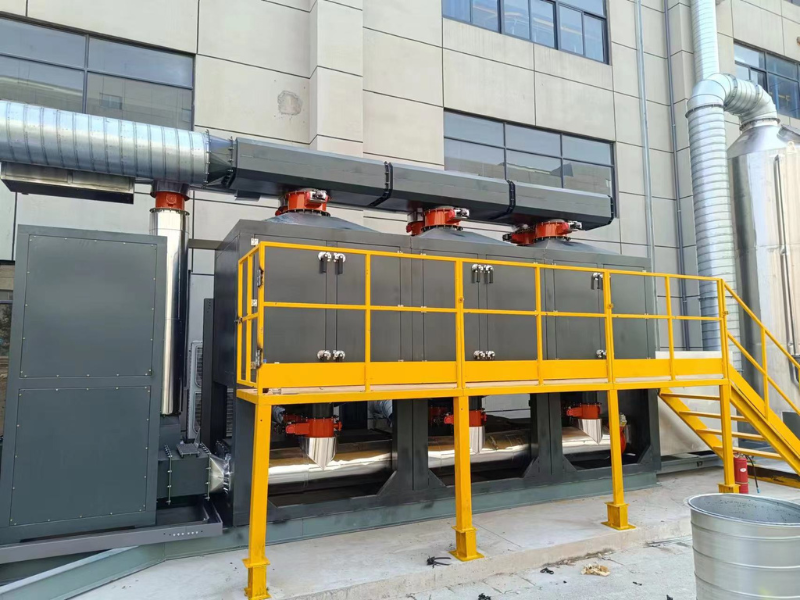
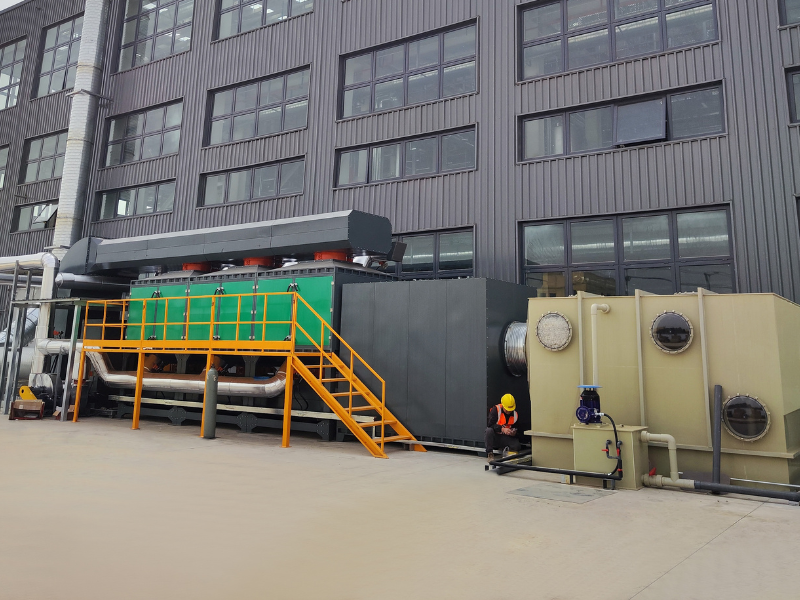
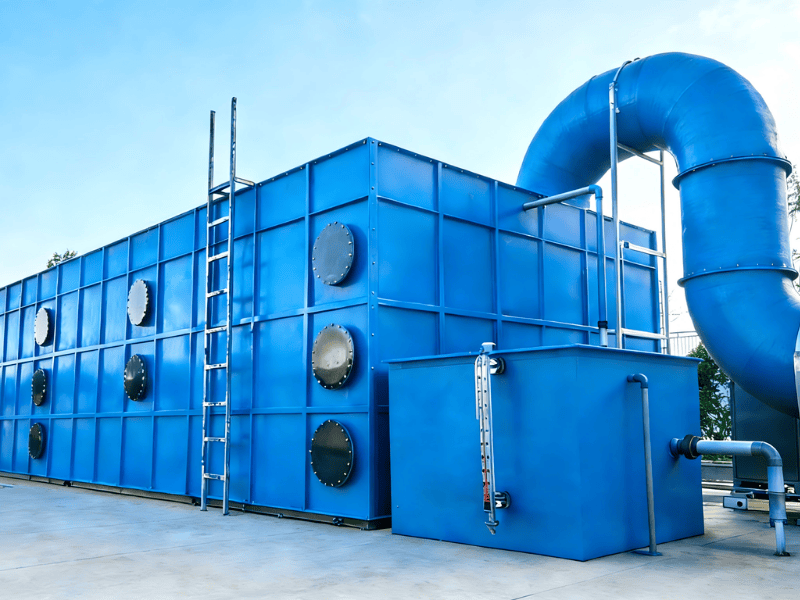
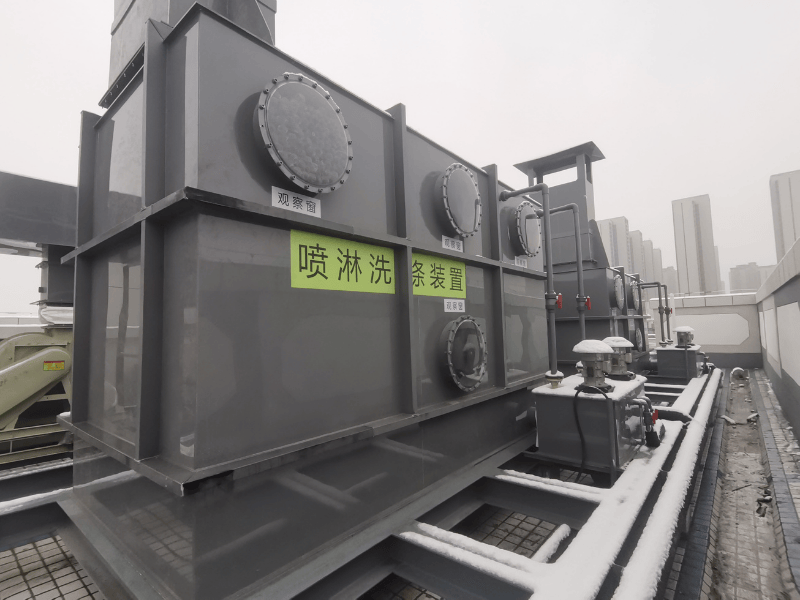
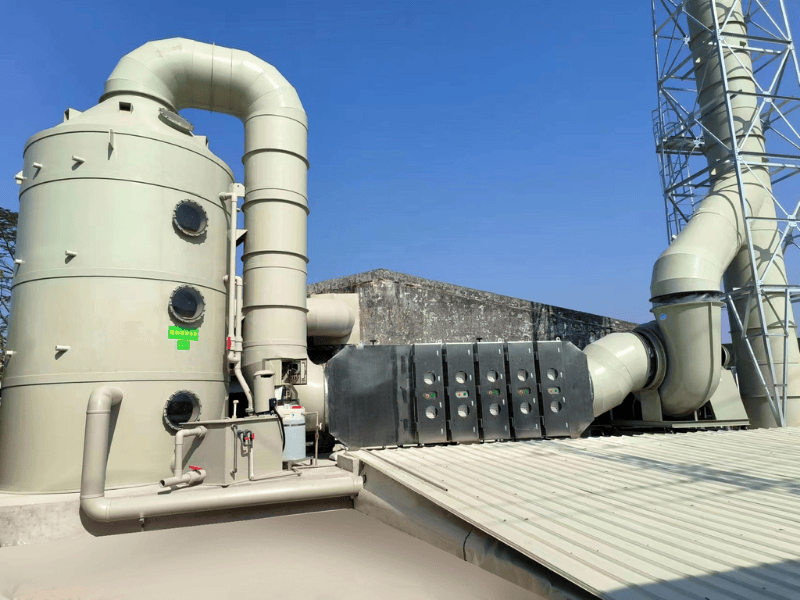
At Guangdong Zhengzhou Environmental Protection Technology Co., Ltd., we design and install plants for the treatment and removal of VOC (volatile organic compounds). We always supply the solution that better fits our customer needs, as the most efficient system for VOC removal can vary depending on the particularities of each case. Some of the aspects to consider are the air flow, VOC concentration, variability of the flow and the composition, and space availability, among others.
The recommended process is documented after the design inputs and safety constraints are reviewed. Available treatment routes include:
- Catalytic Oxidation - High-efficiency thermal destruction of VOCs at lower temperatures
- UV Photolysis + Plasma Purification - Advanced oxidation for complex organic compounds
- Adsorption by Activated Carbon - Effective capture of low-concentration VOC streams
- Biological Treatment - Eco-friendly solution using microorganisms to degrade VOCs
- Regenerative Thermal Oxidation (RTO) - Energy-efficient high-temperature destruction
- Scrubber Systems - Wet chemical absorption for water-soluble VOCs
- High-Energy Ion Deodorization - Non-thermal plasma technology for odor and VOC control
Processes and Technologies for VOC Treatment
The regulations controlling the emission of volatile organic compounds (VOCs) into the atmosphere are increasingly restrictive, as they must be appropriately treated and removed.
At Guangdong Zhengzhou Environmental Protection Technology Co., Ltd., we possess both destructive and non-destructive technologies tailored to treat VOC emissions generated in industrial processes — ensuring compliance with current environmental regulations across different regions.
We are experts in designing the most efficient VOC treatment process, which depends on key factors such as:
- Airflow volume and its variability
- VOC concentration levels and fluctuations
- Available installation space
- Energy efficiency requirements
Below are our core technologies for effective VOC abatement:
Catalytic Oxidation (CO) System
Working Principle
Catalytic oxidation is a highly efficient exhaust gas treatment equipment that utilizes catalysts to lower the activation energy required for organic compound combustion, enabling complete oxidation at relatively low temperatures (typically 300–450°C).
The system includes a heating chamber that initiates internal circulation. When the exhaust gas reaches the boiling point of organics, volatile components are released from activated carbon or directly from the airstream and enter the catalytic reactor. Under the action of the catalyst, organics are decomposed into harmless CO₂ and H₂O, releasing thermal energy in the process.
Key Advantages
- Energy Efficiency: Exhaust gases pass through a heat exchanger before entering the reactor, utilizing residual heat from catalytic combustion to preheat incoming air — significantly reducing energy consumption.
- Safety & Reliability: Equipped with flame arrestors, explosion-proof pressure relief systems, over-temperature alarms, and advanced PLC control systems to ensure safe operation under all conditions.
- Low Pressure Drop: Utilizes honeycomb ceramic catalysts coated with precious metals (Pt/Pd), offering high surface area, minimal resistance, and enhanced reaction efficiency.
- Modular Layout: Reactor, heat exchanger, controls and access clearances are arranged for the available site and maintenance route.
- Defined Performance: The expected destruction efficiency and outlet concentration are established for the agreed compounds, inlet load and acceptance-test conditions.
Application Scenarios
Ideal for treating medium-to-high concentration, low-volume organic exhaust streams from industries including:
- Surface coating & painting booths
- Drying ovens & curing chambers
- Chemical processing & pharmaceutical manufacturing
- Printing & packaging facilities
- Reactor vents & storage tank breathing losses
⚠️ Note: Feed gas must be analyzed prior to operation to identify catalyst poisons such as heavy metals, halogens (Cl, F), sulfur (S), arsenic (As), or phosphorus (P). Regular catalyst inspection and replacement are essential to maintain performance. The automatic control system must remain operational within preset parameters to support long-term stability.
With tightening environmental regulations and growing public awareness, catalytic oxidation systems play an increasingly vital role in sustainable industrial exhaust gas treatment.
Zeolite Rotor Concentrator + RTO/CO Hybrid System
Equipment Principle
This hybrid system combines adsorption concentration with thermal oxidation for optimal treatment of large-volume, low-concentration VOC streams.
Step 1 – Adsorption:
Exhaust gas containing VOCs passes through a rotating zeolite rotor wheel. The porous zeolite material selectively adsorbs VOC molecules while allowing clean air to be discharged directly to the atmosphere.
Step 2 – Desorption & Concentration:
A small stream of heated air (or steam) desorbs the captured VOCs from the saturated zone of the rotor, generating a concentrated VOC stream (typically 5–20x higher than inlet concentration).
Step 3 – Thermal Oxidation:
The concentrated VOC stream is fed into either a Regenerative Thermal Oxidizer (RTO) or Catalytic Oxidizer (CO), where it is destroyed at high temperature (>760°C for RTO; ~300°C for CO), converting pollutants into CO₂ and H₂O.
The regenerated rotor continues rotating back to the adsorption zone, completing the cycle.
Product Features
- Economic Efficiency: Highly cost-effective for high airflow, low concentration applications. Reduces downstream equipment size and operating costs by concentrating dilute streams.
- Operational Flexibility: Adapts dynamically to fluctuating airflow and VOC concentrations while maintaining consistent removal efficiency.
- High Concentration Ratio: Capable of achieving 5–20x concentration multiplier, enabling economical use of RTO/CO units even for very dilute feeds.
- Modular Design: Compact layout minimizes footprint; supports continuous unmanned operation with automated controls.
- Automated Control: High degree of automation with one-button startup, simple interface, and optional remote monitoring via SCADA/HMI for real-time diagnostics and safety assurance.
Industries Served
Our VOC treatment solutions are applied across multiple sectors: