Laboratory Exhaust Gas Treatment
We design specialized exhaust gas treatment systems for laboratory fume hoods and ventilation applications. Our solutions handle a wide range of chemical vapors, acids, and hazardous gases generated in research and testing facilities. We employ activated carbon filters, acid neutralization scrubbers, and HEPA filtration to ensure safe discharge and protection of personnel and the environment.
Send request
Laboratory Exhaust Gas Treatment
Guangdong Zhengzhou Environmental Protection Technology Co., Ltd. specializes in the treatment of smoke and dust emissions from industrial processes. To achieve this, we utilize various technologies including wet scrubbing systems, dry filtration systems, electrostatic precipitators, and catalytic oxidation systems.
Particulate matter is a complex constituent of industrial emissions, consisting of fine particles, smoke, oil mist, and combustion by-products. The selection of appropriate treatment technology depends on particle size, concentration, temperature, and specific industry requirements.
With over 10 years of industry experience and 5000+ completed projects, our company provides comprehensive solutions ranging from initial consultation to implementation and ongoing maintenance support.
Technologies for particulate matter removal

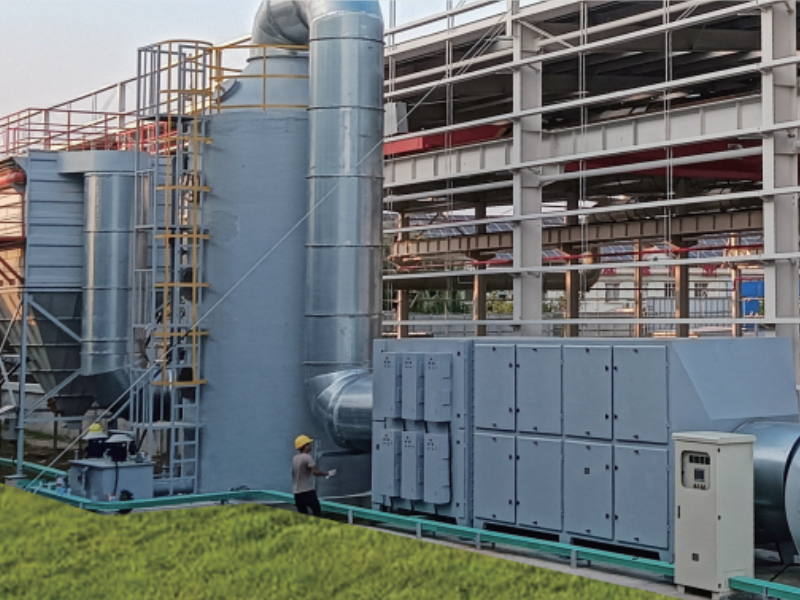
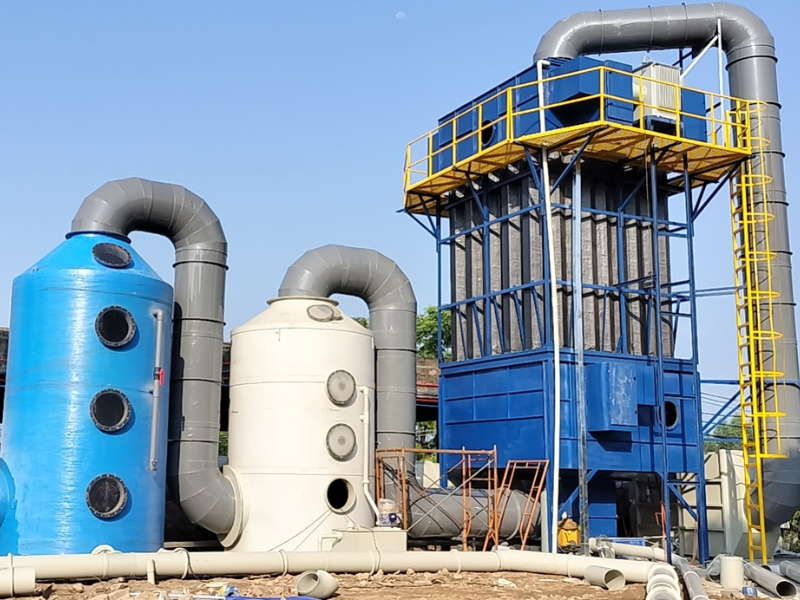
Wet Scrubbing Systems
Wet scrubbing systems use liquid (typically water or chemical solutions) to capture and remove particulate matter from exhaust streams. The contaminated gas stream is brought into contact with the scrubbing liquid, and particles are captured through impaction, diffusion, or absorption.
Key Features:
- Effective for fine particles and soluble contaminants
- Simultaneous removal of particulates and gaseous pollutants
- Suitable for high-temperature exhaust streams
- Requires wastewater treatment system
Applications:
- Chemical processing plants
- Metal smelting facilities
- Incineration plants
Dry Filtration Systems
Dry filtration systems use filter media (fabric bags, cartridges, or ceramic elements) to capture dust and particulate matter. The contaminated air passes through the filter media, and particles are retained on the fiber surface.
Key Features:
- High collection efficiency (>99.9% for fine particles)
- No wastewater generation
- Lower operating costs for dry applications
- Requires periodic filter cleaning or replacement
Applications:
- Woodworking facilities
- Food processing plants
- Pharmaceutical manufacturing
Electrostatic Precipitators
Electrostatic precipitators use high-voltage electric fields to charge particles and collect them on oppositely charged plates. This technology is highly effective for fine particulate matter and smoke removal.
Key Features:
- Excellent efficiency for sub-micron particles
- Low pressure drop across the system
- Suitable for high-temperature applications
- Requires regular maintenance of electrical components
Applications:
- Power plants
- Cement kilns
- Steel manufacturing
Industries and Applications
Smoke and dust emissions are generated from various industrial processes, including:
| Industry | Emission Source | Treatment Solution |
|---|---|---|
| Chemical Processing | Reactor venting, drying operations | Wet scrubber + Activated carbon |
| Metal Fabrication | Welding, cutting, grinding | Bag filter + Electrostatic precipitator |
| Food Processing | Cooking, frying, baking | Electrostatic oil mist collector |
| Woodworking | Sanding, cutting, routing | Bag filter system |
| Laboratory | Fume hood exhaust | HEPA filtration + Chemical scrubber |